
Giants
Opening October 18, 2026
An exhibition of the Royal Belgian Institute of Natural Sciences
Giants
Opening October 18, 2026
An exhibition of the Royal Belgian Institute of Natural Sciences
Days until the special exhibition opening
Day(s)
:
Hour(s)
:
Minute(s)
:
Second(s)
A great opportunity to feel quite small
A snake 15 meters long, a giant ape that stands 3 meters tall or a giant ground sloth weighing several tons: In a time after the dinosaurs, our Earth was once inhabited by gigantic and massive animals. Mostly forgotten today, they had a lasting effect on life on our planet for millions of years.
What do we know about them? Why were they able to grow into giants? And why did they die out? These are the questions you’ll seek answers to in our special exhibition! Come face to face with the largest land mammal Paraceratherium, the megatooth shark Otodus megalodon or Gigantopithecus blacki, a giant ape three times the size of an orangutan. Thanks to skeletons and life-size 3D models, you can get up close to the giants.
A one-of-a-kind experience for everyone over the age of 9!
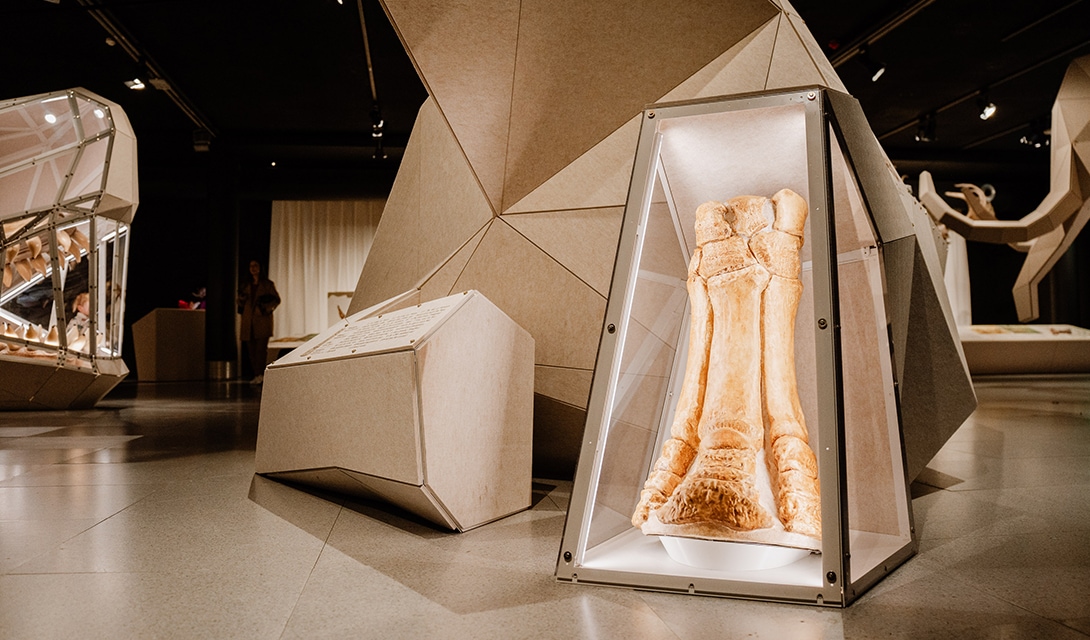
Display item of the Paraceratherium, © Fisheye/RBINS
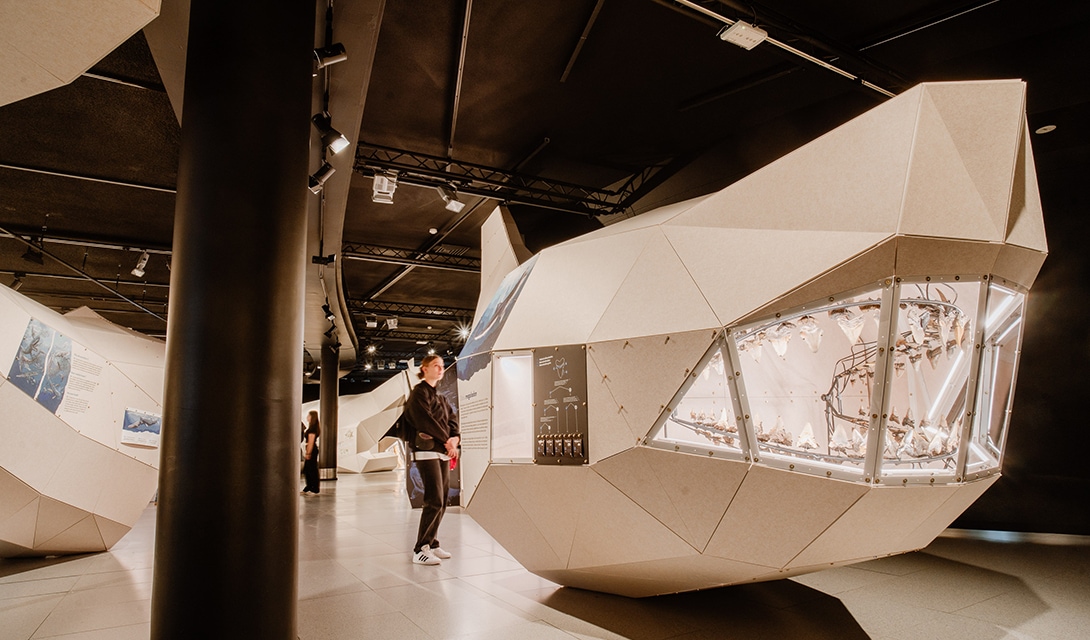
Display item of the Megatooth shark Otodus megalodon, © Fisheye/RBINS
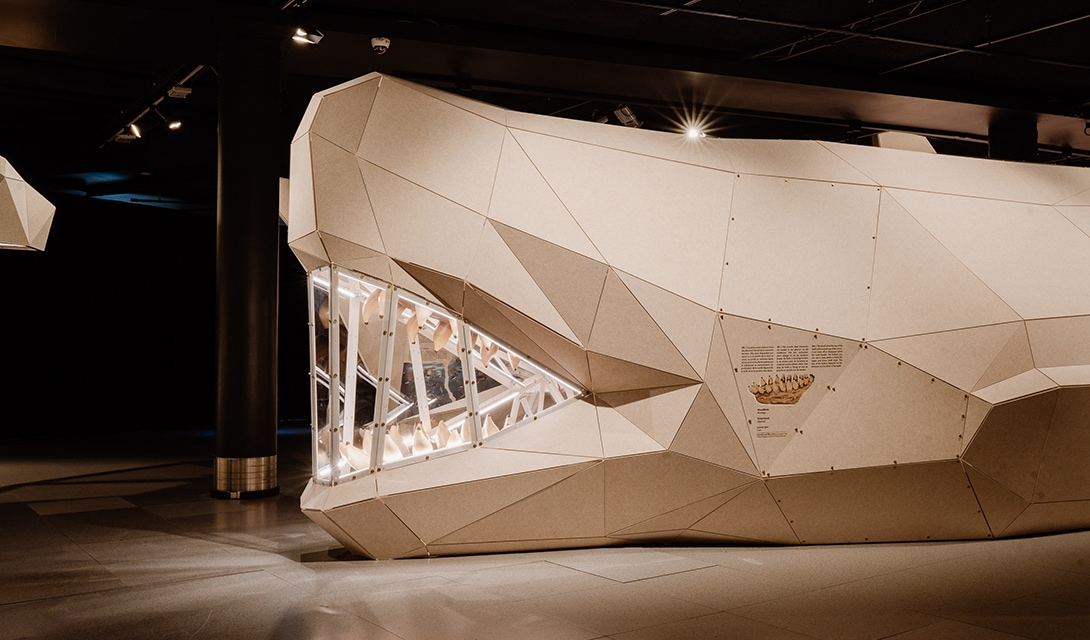
Display item of the prehistoric sperm whale Livyatan melvillei, © Fisheye/RBINS
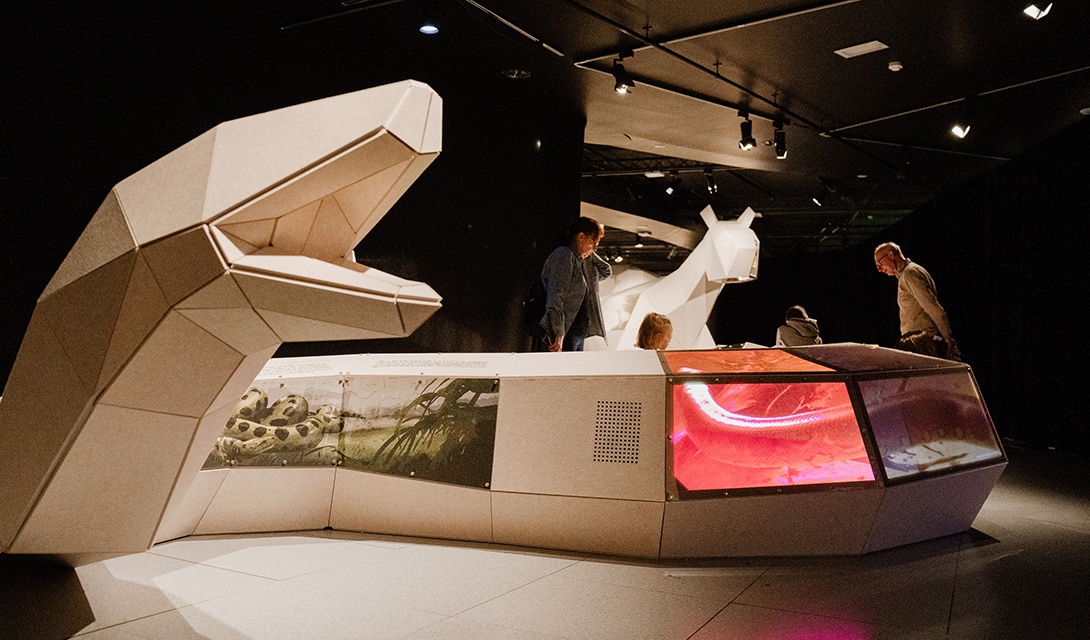
Display item of the giant snake Titanoboa, © Fisheye/RBINS
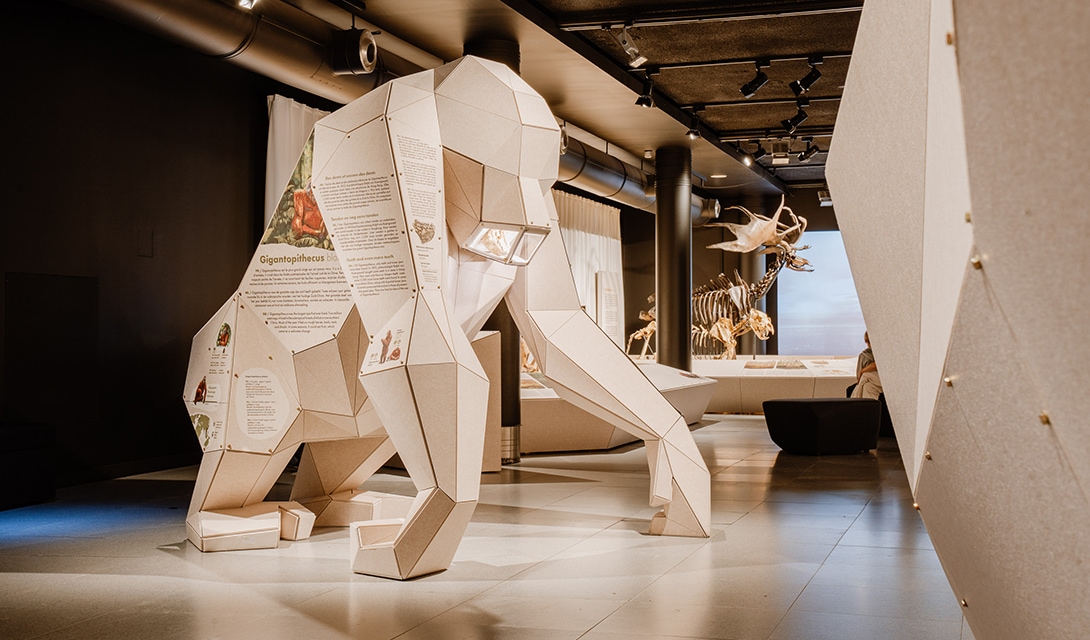
Display item of the giant ape Gigantopithecus blacki, © Fisheye/RBINS
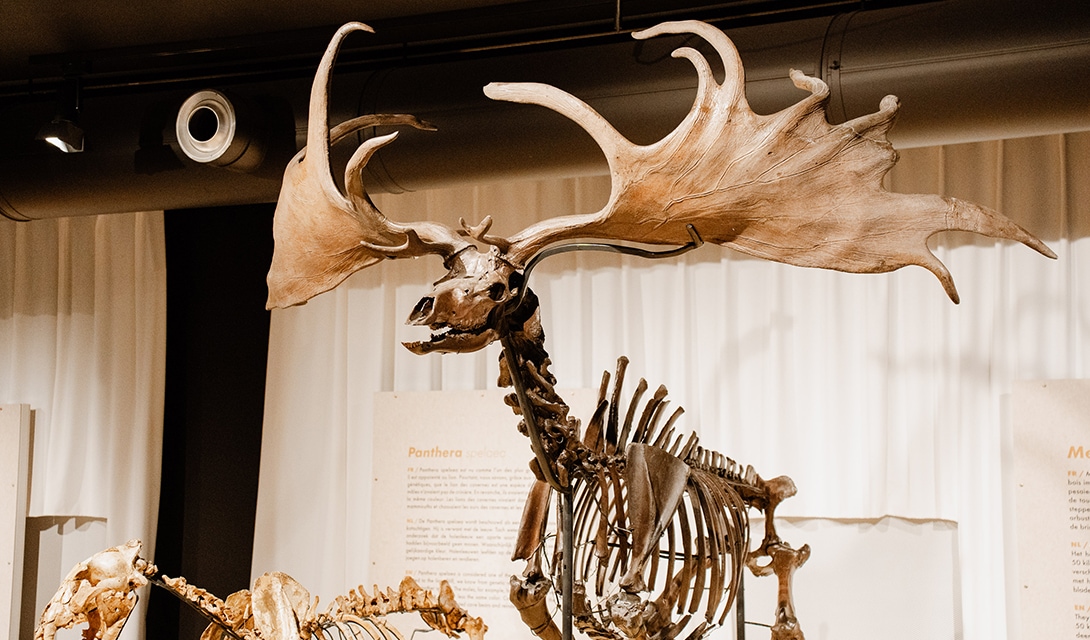
Skeleton of Megaloceros giganteus, © Fisheye/RBINS
Search for evidence in the exhibition
Examine the vertebrae of the giant snake or the molars of a prehistoric rhinoceros. What do these relatively small finds tell us about these gigantic creatures? Find out.
There are still giants on our Earth today. What can we learn from the past to preserve large animals like elephants or whales from extinction?
Titanoboa cerrejonensis
Giant snake
Length: 15 meters
Weight: 730 to 1,135 kg
Paraceratherium species
Prehistoric rhino
Height at the withers: 5 meters
Length: 9 meters
Weight: 17 tons
Otodus megalodon
Megatooth shark
Length: >16 meters
Weight: >60 tons
Megatherium americanum
Giant ground sloth
Length: 6 meters
Weight: 4 tons
Gigantopithecus blacki
Giant ape
Height: 1.8 to 3.7 meters
Weight: 400 kg
Smilodon populator
Saber-toothed cat
Height at the withers: 1.2 meters
Weight: 400 kg
School programme
Unravel mysteries and be creative with “Giants”
For school classes grade 6 and higher
School classes explore the exhibition interactively: they solve riddles and consider the question of what research scientists can find out about extinct animals.
In small groups, the young people go on an exciting mystery tour through the exhibition: which giant weighs as much as 17 small cars? Which is as long as 10 bicycles lined up end to end? And why don’t these gigantic animals exist anymore? To find the right answer, they have to pay close attention and cleverly combine what they learn.
They then move to paper folding and create a game to take home, and, if desired, they can test their memory skills with a Giant memory game. Finally, the students can share their aha moments from the exhibition.
Trained guides accompany the classes.
Dates for our accompanying program may be booked on school days from October 19, 2026 through May 30, 2027.
Booking and contact
Your Subtitle Goes Here

To book, send an e-mail to our Infoservice at buchung@experimenta.science
or call +49 (0) 7131 88795 – 0
If you have any questions about the program, contact
schulkommunikation@experimenta.science.
Events
Close Encounters
360° Film at the Science Dome
Join us on a safari through the African savanna! We’ll show you stunning close-ups of unique animals. Come face to face with lions, elephants, and more in the wild. In our Science Dome, you’ll encounter animals through spectacular 360-degree footage.
Ages 8 and up.
Produced by VR Capture
Dinosaurs: A history of survival
360° Film at the Science Dome
What if dinosaurs aren’t extinct at all? Travel with us through time to discover these fascinating animals. You can watch our 360-degree dome projection and see how dinosaurs have changed over millions of years – until an asteroid impact. Yet some species were able to survive the catastrophe.
Can Mammoths Be Cloned? –
Secrets of Ancient DNA
October 20 with Dr. Patrick Arnold
Whether mammoths, saber-toothed tigers, or dodos—the existence of many extinct animals is evidenced only by fossils. But the latest laboratory methods make possible something that until now seemed possible only in movies: Researchers can extract the DNA of these prehistoric animals and thus investigate various biological aspects.
Image: © University of Potsdam, AI-generated
(OpenAI ChatGPT image generation 2026)
Designed and produced by

Information about your visit
The special exhibition is located on level UG, e1 of experimenta. Admission is included with your experimenta ticket.
Apps can help you during your visit
You can use the NaviLens app or the NaviLensGO app.
The NaviLens app reads the information aloud if you are unable to see it.
The NaviLensGO app provides a brief summary about the animal.
You can find more information here
Information about your visit
The special exhibition is located on level UG, e1 of experimenta. Admission is included with your experimenta ticket.
Apps can help you during your visit
You can use the NaviLens app or the NaviLensGO app.
The NaviLens app reads the information aloud if you are unable to see it.
The NaviLensGO app provides a brief summary about the animal.
You can find more information here
Plan Your Visit

Admission

Opening hours

Directions
